With the entry of subsequent generations, the business underwent successive corporate restructurings, expanding into wholesale and retail trade, import and export, agribusiness and logistics.
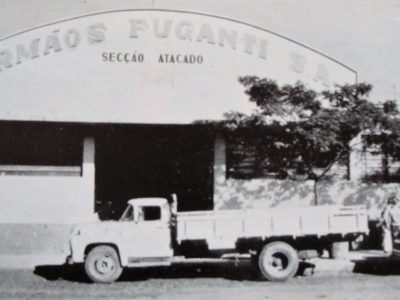
In 1934, the company partnered with the Fontana Group—an association that later contributed to the creation of Sadia. Following the dissolution of the partnership in 1940, the Fuganti family consolidated its operations in Paraná and São Paulo under Irmãos Fuganti S/A.
Post-war, the group became one of the largest organisations in Northern Paraná, headquartered in Londrina, with diversified activities including farms, supermarkets, household goods retail (Plenolar), gas distribution (Plenogás), and transport services (Rodobrás).
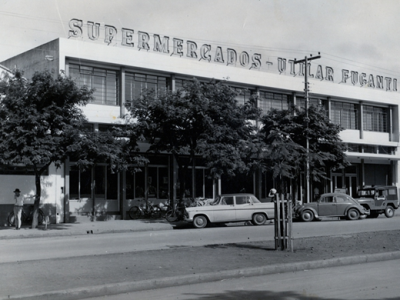
The family’s arrival in Maringá in 1953 marked significant milestones, including the opening of the city’s first supermarket in 1966. The group also invested in industrial real estate, distribution centres, and social infrastructure, such as the Comendador Júlio Fuganti Stadium.
From the 1970s onward, market changes and family reorganisations led to a gradual withdrawal from Maringá, culminating in the closure of operations in the late 1980s and the dissolution of J. Fuganti S/A.
In summary, the Fuganti family—whose roots trace back to Austria and Italy—has been active in Brazil’s import and export sector for over 200 years, consistently upholding transparency, integrity, and respect in business partnerships.


 English (UK)
  Português do Brasil